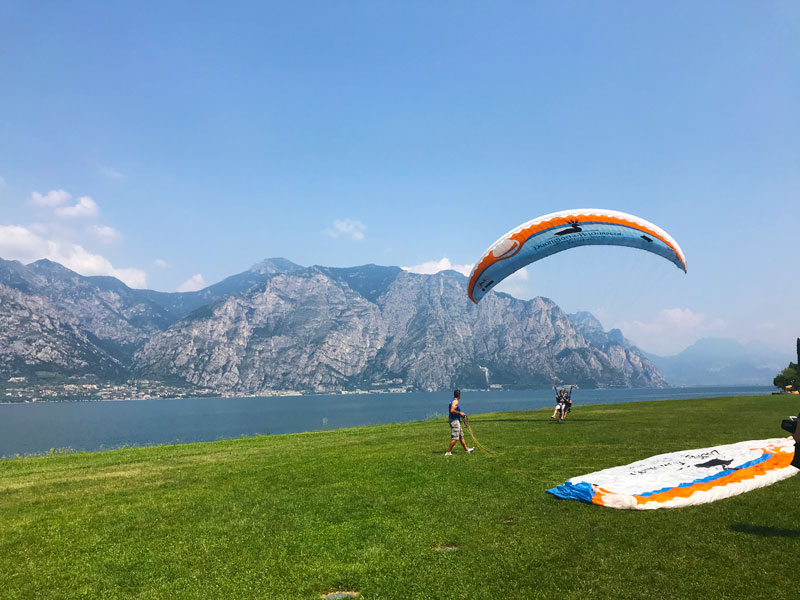
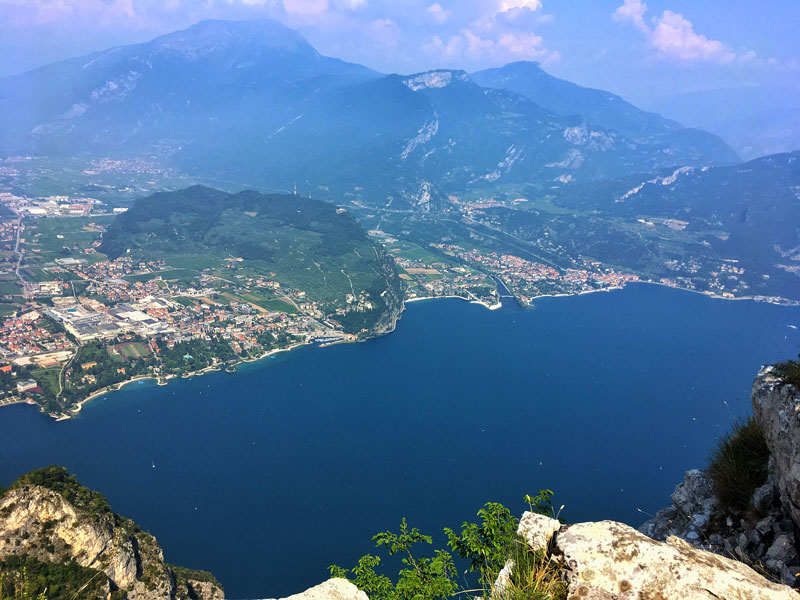
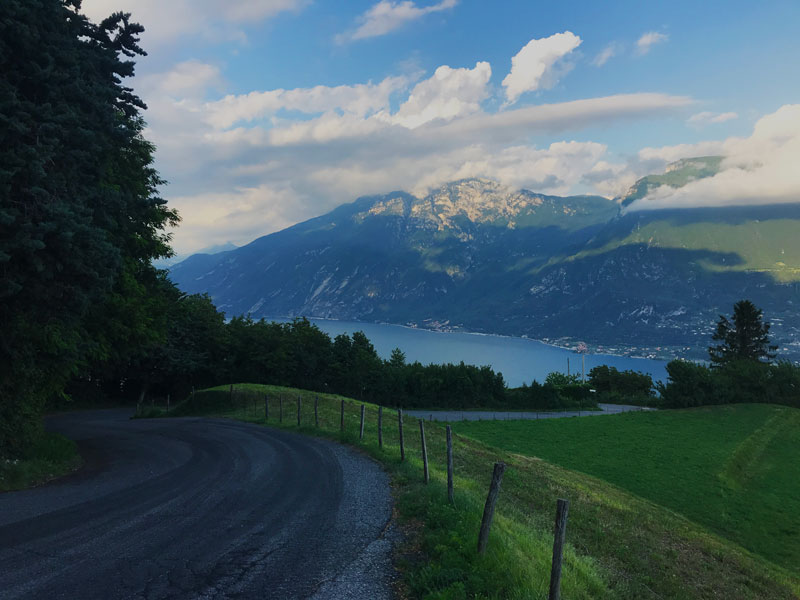
Garda has magic in it. A lot of magic. Those who experience it once usually return. I experienced this firsthand, spending my second vacation there in a row. In the first episode of my new series, I'll introduce you to it, tell you about the climate, and describe how to get there in various ways.
General Information
Garda is Italy's largest lake. It has almost 160 kilometers of shoreline, its length is 52 km, and its width at the widest point is 16 kilometers. It's sometimes called a sea. And there's no exaggeration in that. This reservoir located in northern Italy administratively lies within 3 provinces - Verona, Brescia, and Trento. The southern side of Garda is located in lowland areas, while the northern side is surrounded by the first peaks of the Alps from the south (the range is called Gardaseeberge in German with many peaks up to about 2200 meters high). This arrangement means that Garda has different faces. From the typically touristy southern end to the sporty-athletic north. I personally explored the northern side quite thoroughly. The range of activities here is exceptionally rich. From every possible water sport, through mountain hikes, climbing, via ferratas, to a huge number of cycling routes. No lover of active leisure will leave here disappointed! Due to the proximity to Germany, residents of that country constitute the largest group of tourists visiting Garda. The reason for this is also that thanks to the autonomy granted in 1972 to the entire Trentino and South Tyrol, German is treated on equal footing with Italian. Moreover, the locals' knowledge of English isn't bad either. Anyone who knows the linguistic abilities of Italians closely knows that this is a huge advantage of these regions :)
Climate and Water Temperature of Lake Garda
A Mediterranean climate prevails here, which (especially in the northern part of the lake) is influenced by the surrounding Alps. Summer months are characterized by temperatures oscillating around 30 degrees, which with an average water temperature of 24-26 degrees creates brilliant conditions for spending a vacation at Lake Garda. However, in the northern part of the reservoir, you must reckon with quite strong local winds - the famous Ora and Peler. These attract crowds of windsurfing and kitesurfing enthusiasts, giving them lots of sporting joy :) The mild climate with little precipitation means that people focused on typically active recreation will have things to do practically from April to October. Many mountain enthusiasts head out after winter, in March and April, to via ferratas around Lake Garda, when the rest of the Alps are sleeping soundly under piles of snow. The direct proximity of mountains has undeniable advantages, but also disadvantages. The weather can change literally in a moment, often contrary to all forecasts. I experienced this myself several times.
Getting There
Getting to Lake Garda by car With several people, traveling by your own car is most cost-effective. It's not the shortest trip, as the journey from Poland takes
several hours behind the wheel, from Vienna about 7-8 hours. If this is a problem, you can plan an overnight stay in some beautiful place along the way. Depending on your departure point, you'll take the route through Germany and Austria (Berlin - Nuremberg - Munich - Innsbruck - Bolzano, or Dresden - Munich - Innsbruck - Bolzano) - for those traveling from western Poland. Those departing from eastern and central Poland will need to head to the Czech Republic/Slovakia - Austria and then it depends on the destination at Garda. To the south of Garda, it's best to go through Venice, while to the north the most advantageous route leads through Salzburg - Bavaria and Innsbruck. It's best to follow Google Maps directions, because many factors influence the route choice and Google usually knows better than us :) Vignettes If your route takes you through the Czech Republic, Slovakia, and Austria, you must remember to buy a vignette. The total cost (for 7-10 days) should not exceed 130 PLN. You can buy them at any station near the border. If you're buying outside Poland's borders, the most advantageous option is paying for the vignette by card. Besides that, toll booths in Italy and Austria welcome us - one way the total cost is about 20 euros.
By plane to Lake Garda Here you also have many options, 4 airports are within reach. The closest is the airport in
Verona, only 20 minutes from the town of Peschiera del Garda! The airport in Bergamo, very well connected with Poland, is about 50 minutes from the south of Lake Garda. The town of Bergamo itself is beautiful and worth dedicating one day to sightseeing. Unfortunately, I haven't experienced it firsthand yet. But I know from a reliable source :) About 1.5 - 2 hours from Garda are airports in Venice and Milan (Malpensa). At each of these airports, we'll find buses (shuttles) running toward Garda, as well as numerous private companies offering such services. Before vacation, it's worth getting better acquainted with the offer and schedules.
Getting to Lake Garda by train Vienna residents have the option of taking a night train to Verona, Desenzano del Garda, or Peschiera at quite an interesting
price starting from 29 euros (search for connections - LINK). Car owners can also take advantage of the offer to travel with their own car or motorcycle placed on a platform. I regret a bit not knowing about this option earlier - it looks interesting. Regarding the costs and conditions of such transport, unfortunately I don't have deeper insight.
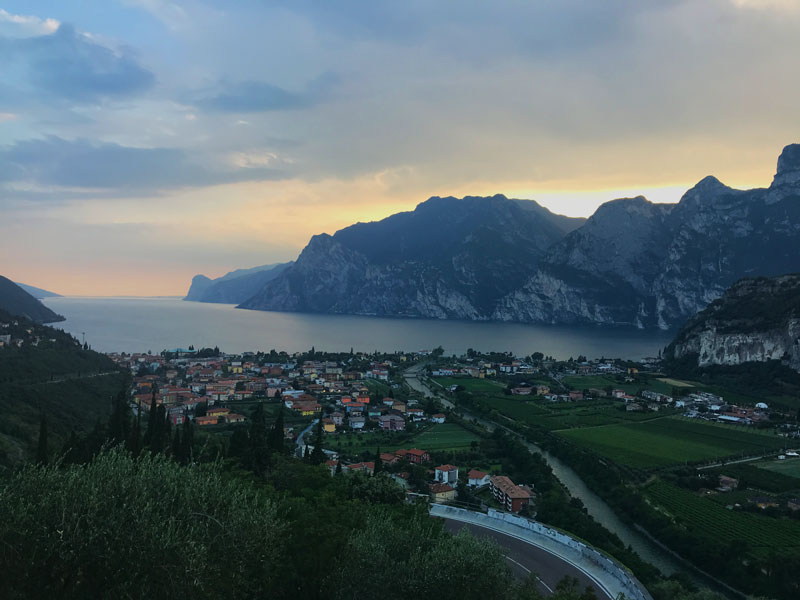
End of the day at Garda, looking from the town of Nago
In Summary
I hope you'll use the information provided above and let yourself be seduced by Garda! I could write about it endlessly, constantly dreaming of another trip. This was an introduction to a beautiful journey and discovering this exceptional place together, I hope you'll patiently await the next chapter! Next time I'll describe the accommodation realities prevailing in those areas along with prices, and delve into one of the most fascinating Italian topics for me - food.